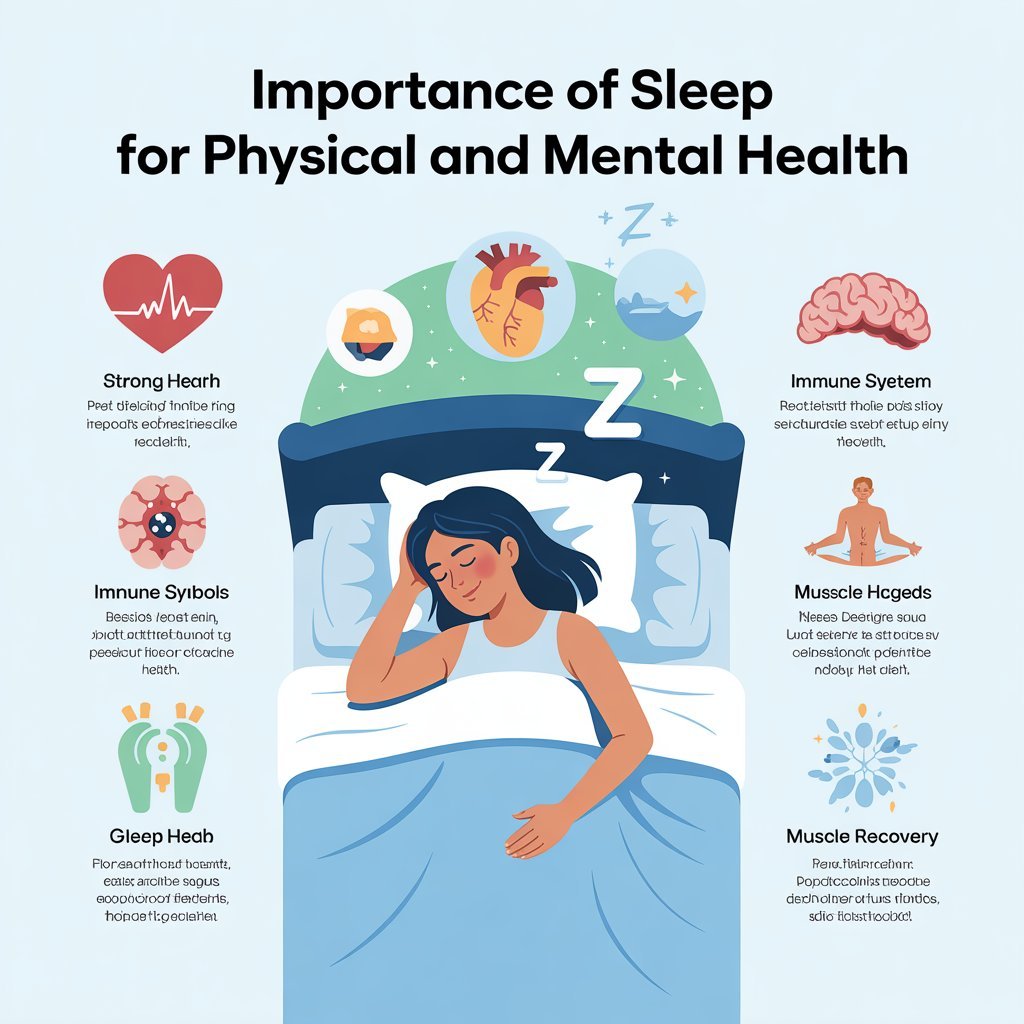
Sleep is not just a time when your body rests. It is an essential process that helps your body repair, recharge, and function properly. In today’s busy world, many people sacrifice sleep for work, studies, or entertainment — but poor sleep can seriously affect both physical and mental health.
This guide explains why sleep is important and how it impacts your overall well-being.
Why Sleep Is Essential
Sleep allows your body and brain to recover from daily activities. During sleep:
- Your body repairs tissues
- Your brain processes information
- Hormones are balanced
- Your immune system strengthens
Without enough sleep, your health can suffer in many ways.
Benefits of Sleep for Physical Health
1. Strengthens the Immune System
Good sleep helps your body fight infections and illnesses. Poor sleep weakens immunity and increases the risk of getting sick.
2. Supports Heart Health
Lack of sleep can increase blood pressure and stress levels, raising the risk of heart disease.
3. Helps Maintain Healthy Weight
Sleep regulates hormones that control hunger. Poor sleep may increase cravings and lead to weight gain.
4. Improves Energy Levels
Quality sleep restores energy, helping you stay active and productive throughout the day.
5. Aids Muscle Recovery
Sleep is important for muscle repair and recovery, especially after physical activity.
Benefits of Sleep for Mental Health
1. Improves Mood
Good sleep reduces irritability, stress, and mood swings.
2. Enhances Focus and Memory
During sleep, your brain processes and stores information, improving learning and concentration.
3. Reduces Anxiety and Stress
Sleep helps regulate stress hormones. Poor sleep can increase anxiety levels.
4. Supports Emotional Balance
Enough rest helps you respond calmly to daily challenges.
How Much Sleep Do You Need?
- Adults: 7–9 hours per night
- Teenagers: 8–10 hours
- Children: 9–12 hours
Individual needs may vary slightly, but consistent quality sleep is key.
Signs You’re Not Getting Enough Sleep
- Constant fatigue
- Difficulty concentrating
- Frequent headaches
- Mood changes
- Increased cravings for unhealthy food
If these symptoms occur regularly, improving your sleep habits may help.
Tips for Better Sleep
1. Maintain a Regular Sleep Schedule
Go to bed and wake up at the same time every day.
2. Limit Screen Time Before Bed
Avoid phones, tablets, and TVs at least 30–60 minutes before sleeping.
3. Create a Relaxing Bedtime Routine
Read a book, meditate, or take a warm shower.
4. Make Your Bedroom Comfortable
Keep the room dark, quiet, and cool.
5. Avoid Heavy Meals and Caffeine at Night
They can disturb sleep quality.
Long-Term Risks of Poor Sleep
Chronic sleep deprivation can increase the risk of:
- Obesity
- Diabetes
- Heart disease
- Depression
- Weak immune system
Sleep is not a luxury — it’s a necessity.
FAQs
Q1: Can I catch up on sleep during weekends?
Occasional extra sleep helps, but regular sleep patterns are more beneficial.
Q2: Is 6 hours of sleep enough?
Most adults need at least 7 hours for optimal health.
Q3: Does sleep affect mental health?
Yes. Poor sleep increases stress, anxiety, and mood disorders.
Q4: Why do I feel tired even after sleeping?
Poor sleep quality, stress, or irregular sleep schedules may be the cause.
Q5: Is napping during the day healthy?
Short naps (20–30 minutes) can boost energy, but long naps may disturb nighttime sleep.
Conclusion
Sleep plays a vital role in both physical and mental health. It strengthens immunity, supports heart health, improves mood, enhances memory, and boosts overall energy.
Making sleep a priority is one of the simplest and most powerful ways to improve your life. Protect your sleep — your body and mind depend on it 🌙