Every time you open a website, send a message, or watch a video online, something important works behind the scenes—an IP address. Most people use the internet daily but don’t know what an IP address is or why it matters.
This article explains what an IP address is, how it works, and why it’s essential for the internet to function.
What Is an IP Address?
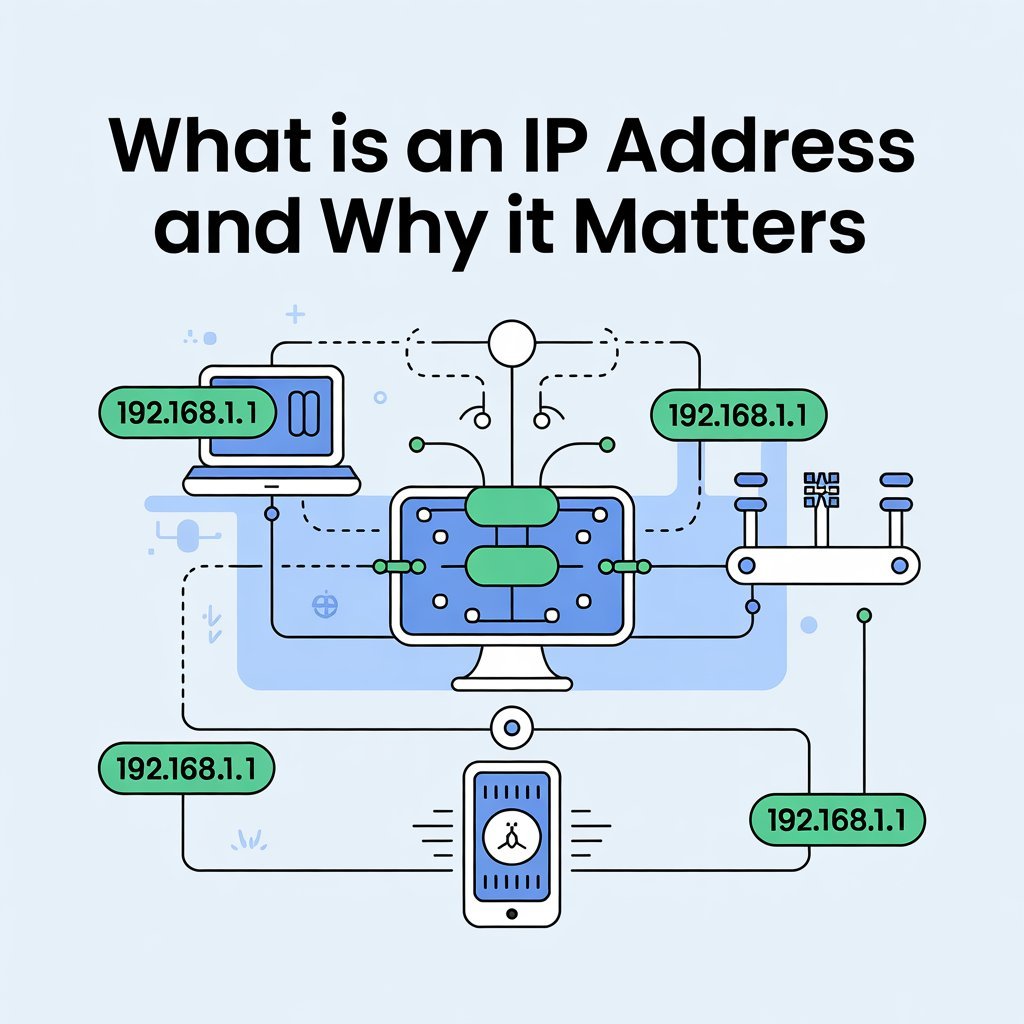
An IP address (Internet Protocol address) is a unique number assigned to every device connected to the internet. It helps devices identify and communicate with each other.
Think of an IP address like a home address:
- Your home address tells people where to send mail
- An IP address tells the internet where to send data
Without IP addresses, the internet would not work.
Why IP Addresses Are Important
IP addresses make sure data goes to the right device.
They Help With:
- Loading websites
- Sending emails and messages
- Streaming videos
- Online gaming
- Connecting apps and servers
Every online action depends on IP addresses.
How an IP Address Works
When you visit a website:
- Your device sends a request
- The request includes your IP address
- The website’s server knows where to send data back
- Data returns to your device using that IP address
This process happens in milliseconds.
Types of IP Addresses
There are different types of IP addresses, each with a specific role.
1. Public IP Address
- Assigned by your internet service provider (ISP)
- Visible on the internet
- Used to identify your network
This is the address websites see.
2. Private IP Address
- Used inside your local network
- Assigned by your router
- Not visible to the public internet
Your phone, laptop, and smart TV all have private IPs.
IPv4 vs IPv6
There are two main IP address formats.
IPv4
- Example:
192.168.1.1 - Older and widely used
- Limited number of addresses
IPv6
- Example:
2001:0db8:85a3::8a2e:0370:7334 - Newer and more secure
- Supports billions of devices
IPv6 was created because the internet ran out of IPv4 addresses.
Dynamic vs Static IP Addresses
Dynamic IP
- Changes over time
- Common for home users
- More secure and cost-effective
Static IP
- Never changes
- Used by businesses and servers
- Easier to host services
Why IP Addresses Matter for Security
IP addresses play a key role in online safety.
Security Uses
- Detecting suspicious activity
- Blocking harmful traffic
- Preventing fraud and abuse
However, IP addresses can also be targeted, which is why firewalls and protection tools are important.
IP Addresses and Location
An IP address can show approximate location, such as:
- Country
- City
- Internet provider
It does not reveal your exact home address.
Common Myths About IP Addresses
Myth 1: IP addresses show your exact location
❌ False. They only show an approximate area.
Myth 2: Changing IP means you’re anonymous
❌ Not completely. Other tracking methods exist.
Myth 3: Only computers have IP addresses
❌ Phones, smart TVs, and even smart fridges use IPs.
How to Protect Your IP Address
Basic Protection Tips
- Use secure networks
- Avoid public Wi-Fi when possible
- Keep your router updated
- Use trusted security tools
Protecting your IP improves online safety.
FAQs – IP Address Explained
Q1: Can two devices have the same IP address?
Public IPs are unique, but private IPs can be reused inside different networks.
Q2: Can someone hack me using my IP address?
Not easily, but attackers can target unsecured networks.
Q3: Does restarting a router change the IP address?
In many cases, yes—if you use a dynamic IP.
Q4: Is an IP address personal data?
It’s considered sensitive but doesn’t reveal personal identity alone.
Q5: Can I hide my IP address?
Yes, through privacy-focused tools and secure networks.
Conclusion
An IP address is the backbone of internet communication. It allows devices to connect, share data, and function smoothly online. While most users never see it, every online action depends on an IP address working in the background.
Understanding IP addresses helps you stay informed, safer, and more confident in the digital world.
Every time you open a website, send a message, or watch a video online, something important works behind the scenes—an IP address. Most people use the internet daily but don’t know what an IP address is or why it matters.
This article explains what an IP address is, how it works, and why it’s essential for the internet to function.
What Is an IP Address?
An IP address (Internet Protocol address) is a unique number assigned to every device connected to the internet. It helps devices identify and communicate with each other.
Think of an IP address like a home address:
- Your home address tells people where to send mail
- An IP address tells the internet where to send data
Without IP addresses, the internet would not work.
Why IP Addresses Are Important
IP addresses make sure data goes to the right device.
They Help With:
- Loading websites
- Sending emails and messages
- Streaming videos
- Online gaming
- Connecting apps and servers
Every online action depends on IP addresses.
How an IP Address Works
When you visit a website:
- Your device sends a request
- The request includes your IP address
- The website’s server knows where to send data back
- Data returns to your device using that IP address
This process happens in milliseconds.
Types of IP Addresses
There are different types of IP addresses, each with a specific role.
1. Public IP Address
- Assigned by your internet service provider (ISP)
- Visible on the internet
- Used to identify your network
This is the address websites see.
2. Private IP Address
- Used inside your local network
- Assigned by your router
- Not visible to the public internet
Your phone, laptop, and smart TV all have private IPs.
IPv4 vs IPv6
There are two main IP address formats.
IPv4
- Example:
192.168.1.1 - Older and widely used
- Limited number of addresses
IPv6
- Example:
2001:0db8:85a3::8a2e:0370:7334 - Newer and more secure
- Supports billions of devices
IPv6 was created because the internet ran out of IPv4 addresses.
Dynamic vs Static IP Addresses
Dynamic IP
- Changes over time
- Common for home users
- More secure and cost-effective
Static IP
- Never changes
- Used by businesses and servers
- Easier to host services
Why IP Addresses Matter for Security
IP addresses play a key role in online safety.
Security Uses
- Detecting suspicious activity
- Blocking harmful traffic
- Preventing fraud and abuse
However, IP addresses can also be targeted, which is why firewalls and protection tools are important.
IP Addresses and Location
An IP address can show approximate location, such as:
- Country
- City
- Internet provider
It does not reveal your exact home address.
Common Myths About IP Addresses
Myth 1: IP addresses show your exact location
❌ False. They only show an approximate area.
Myth 2: Changing IP means you’re anonymous
❌ Not completely. Other tracking methods exist.
Myth 3: Only computers have IP addresses
❌ Phones, smart TVs, and even smart fridges use IPs.
How to Protect Your IP Address
Basic Protection Tips
- Use secure networks
- Avoid public Wi-Fi when possible
- Keep your router updated
- Use trusted security tools
Protecting your IP improves online safety.
FAQs – IP Address Explained
Q1: Can two devices have the same IP address?
Public IPs are unique, but private IPs can be reused inside different networks.
Q2: Can someone hack me using my IP address?
Not easily, but attackers can target unsecured networks.
Q3: Does restarting a router change the IP address?
In many cases, yes—if you use a dynamic IP.
Q4: Is an IP address personal data?
It’s considered sensitive but doesn’t reveal personal identity alone.
Q5: Can I hide my IP address?
Yes, through privacy-focused tools and secure networks.
Conclusion
An IP address is the backbone of internet communication. It allows devices to connect, share data, and function smoothly online. While most users never see it, every online action depends on an IP address working in the background.
Understanding IP addresses helps you stay informed, safer, and more confident in the digital world.