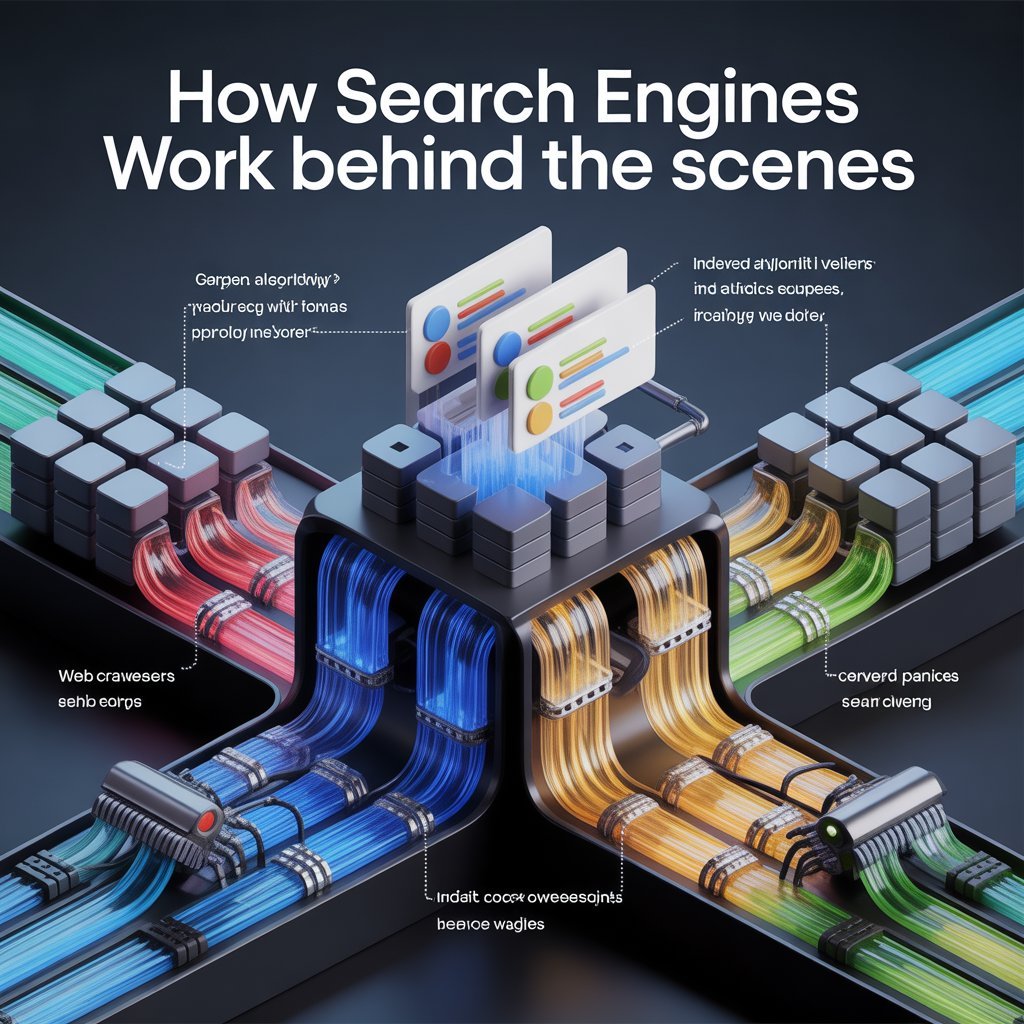
Every day, billions of people use search engines like Google, Bing, or DuckDuckGo to find answers online. You type a question, hit search, and within seconds you get millions of results. But have you ever wondered how search engines actually work behind the scenes?
This article explains the behind-the-scenes process of search engines in simple words, even if you have no technical background.
What Is a Search Engine?
A search engine is a software system designed to find information on the internet and present the most relevant results based on a user’s search query.
Its main goal is simple:
👉 Give users the best possible answers as quickly as possible.
The Three Main Steps of How Search Engines Work
Search engines work in three major stages:
- Crawling
- Indexing
- Ranking
Let’s break each one down.
1. Crawling: Discovering Web Pages
Crawling is the first step where search engines find new and updated pages on the internet.
How Crawling Works
- Search engines use bots called crawlers or spiders
- These bots visit websites and read their content
- They follow links from one page to another
- New pages and updates are discovered continuously
💡 Think of crawlers as digital explorers moving across the web.
2. Indexing: Storing Information
After crawling a page, the search engine tries to understand it. This process is called indexing.
What Happens During Indexing
- Text, images, and videos are analyzed
- Keywords and topics are identified
- Content is stored in a massive database called the search index
If a page is not indexed, it cannot appear in search results.
3. Ranking: Choosing the Best Results
When you search for something, the search engine doesn’t scan the entire internet. Instead, it looks into its index and ranks the best results.
Ranking Factors Include
- Content relevance
- Keyword usage
- Page quality
- User experience
- Page speed
- Mobile friendliness
The most useful and trustworthy pages appear at the top.
How Search Engines Understand Search Queries
Search engines are smart. They don’t just look for exact words.
They Analyze
- Search intent (what the user really wants)
- Related keywords
- Location and language
- Search history (in some cases)
For example, searching “best budget phone” shows buying guides, not definitions.
Role of Keywords in Search Engines
Keywords help search engines understand what a page is about.
Where Keywords Matter
- Page title
- Headings (H1, H2, H3)
- Content text
- Meta description
However, modern search engines focus more on content quality, not keyword stuffing.
Importance of Content Quality
High-quality content ranks better because it:
- Answers user questions clearly
- Is original and helpful
- Is well-structured
- Keeps users engaged
Search engines aim to show content that provides real value.
How Links Help Search Engines
Links act like votes of trust.
Types of Links
- Internal links: Connect pages on the same website
- Backlinks: Links from other websites
Pages with high-quality backlinks are often seen as more trustworthy.
User Experience Signals
Search engines track how users interact with pages.
User Signals Include
- Time spent on page
- Bounce rate
- Mobile usability
- Page loading speed
A better user experience can improve rankings.
Mobile and Speed Optimization
Most searches now happen on mobile devices.
Search Engines Prefer Pages That Are
- Mobile-friendly
- Fast-loading
- Secure (HTTPS)
Slow or poorly designed pages may rank lower.
Do Search Engines Show the Same Results to Everyone?
Not always.
Search results can vary based on:
- Location
- Language
- Device
- Search history
This helps provide more relevant results.
Common Myths About Search Engines
Myth 1: More keywords mean better ranking
❌ False. Quality matters more than quantity.
Myth 2: Ranking happens instantly
❌ False. Crawling and indexing take time.
Myth 3: Paid ads affect organic rankings
❌ False. Ads and organic results are separate.
Why Understanding Search Engines Matters
Knowing how search engines work helps:
- Website owners improve visibility
- Bloggers create better content
- Businesses reach the right audience
- Users find reliable information
It’s essential knowledge in the digital world.
FAQs – How Search Engines Work
Q1: How long does it take for a page to appear on Google?
It can take hours to weeks, depending on crawling and indexing.
Q2: Can I control how search engines rank my site?
You can improve chances through quality content and SEO, but rankings are not guaranteed.
Q3: What is SEO?
SEO (Search Engine Optimization) is the practice of improving a website to rank better in search results.
Q4: Do search engines read images?
They can’t “see” images, but they understand image text and descriptions.
Q5: Are search engine algorithms public?
No. Exact algorithms are secret, but general ranking factors are known.
Conclusion
Search engines work through a complex but logical process of crawling, indexing, and ranking. Their goal is to deliver the most accurate, helpful, and relevant results to users.
Understanding how search engines work behind the scenes helps you create better content, improve visibility, and navigate the digital world more confidently.